

• Latest
  • Trending
  • All
  • News
  • Lifestyle
Albert Einstein and Hubble may have helped us find an invisible black hole thumbnail

Albert Einstein and Hubble may have helped us find an invisible black hole

February 10, 2022
Homo floresiensis Probably Didn’t Hunt Stegodons or Use Fire thumbnail

Homo floresiensis Probably Didn’t Hunt Stegodons or Use Fire

July 7, 2026
Researchers in Switzerland invent a new type of pixel thumbnail

Researchers in Switzerland invent a new type of pixel

July 7, 2026
USS Constitution Sets Sail in Boston Harbor to Celebrate America's 250th Birthday thumbnail

USS Constitution Sets Sail in Boston Harbor to Celebrate America’s 250th Birthday

July 6, 2026
America Has Two Options at the Box Office This Fourth of July Weekend. The Choice Is Clear. thumbnail

America Has Two Options at the Box Office This Fourth of July Weekend. The Choice Is Clear.

July 4, 2026
Massachusetts Set to Extend Statute of Limitations for Rape Cases With DNA Evidence thumbnail

Massachusetts Set to Extend Statute of Limitations for Rape Cases With DNA Evidence

July 4, 2026
Why Rockport, Massachusetts, is one of the best small towns in the U.S. thumbnail

Why Rockport, Massachusetts, is one of the best small towns in the U.S.

July 3, 2026
Red Sox, Mets front offices have a lot to prove, and that should start with trading two coveted arms thumbnail

Red Sox, Mets front offices have a lot to prove, and that should start with trading two coveted arms

July 3, 2026
After 53 years, the FAA wants to bring back civilian supersonic flight thumbnail

After 53 years, the FAA wants to bring back civilian supersonic flight

July 3, 2026
Gas Prices Drop for Fifth Week as Independence Day Travel Surges thumbnail

Gas Prices Drop for Fifth Week as Independence Day Travel Surges

July 3, 2026
Apple and Google sat for discussions to unlock 50W wireless charging for smartphones thumbnail

Apple and Google sat for discussions to unlock 50W wireless charging for smartphones

July 1, 2026
The Supreme Court defended mail-in voting. That won’t stop Trump. thumbnail

The Supreme Court defended mail-in voting. That won’t stop Trump.

July 1, 2026
Dean: We Will Investigate Trump's Corruption if Dems Win Midterms thumbnail

Dean: We Will Investigate Trump’s Corruption if Dems Win Midterms

July 1, 2026
  • About
  • Advertise
  • Privacy & Policy
  • Contact
  • Donate
Wednesday, July 8, 2026
66 °f
Wellfleet
58 ° Tue
63 ° Wed
68 ° Thu
61 ° Fri
  • Login
  • Register
FREE Cape Cod News
DONATE
  • FREE Cape Cod News
  • Cape Cod News
  • News
    • News
    • Massachusetts
    • Breaking News
    • Cape Cod Weather
    • Storm Watch
    • Environment
  • Politics
    • democrats
    • republicans
  • Business
    • business
    • cryptocurrency
    • economy
    • money
    • Real Estate
    • Tech
  • World
  • Entertainment
  • Lifestyle
  • Photos
    • Orleans
    • Eastham
    • Wellfleet
    • Truro
    • Provincetown
    • Brewster
    • Chatham
  • Videos
No Result
View All Result
Free Cape Cod News
No Result
View All Result
  • FREE Cape Cod News
  • Cape Cod News
  • News
  • Politics
  • Business
  • World
  • Entertainment
  • Lifestyle
  • Photos
  • Videos
Home Lifestyle Nature

Albert Einstein and Hubble may have helped us find an invisible black hole

FREE Cape Cod News by FREE Cape Cod News
February 10, 2022
in Nature
Reading Time: 5 mins read
Donate
0
Albert Einstein and Hubble may have helped us find an invisible black hole thumbnail
634
SHARES
1.4k
VIEWS
Share on TwitterShare on Facebook

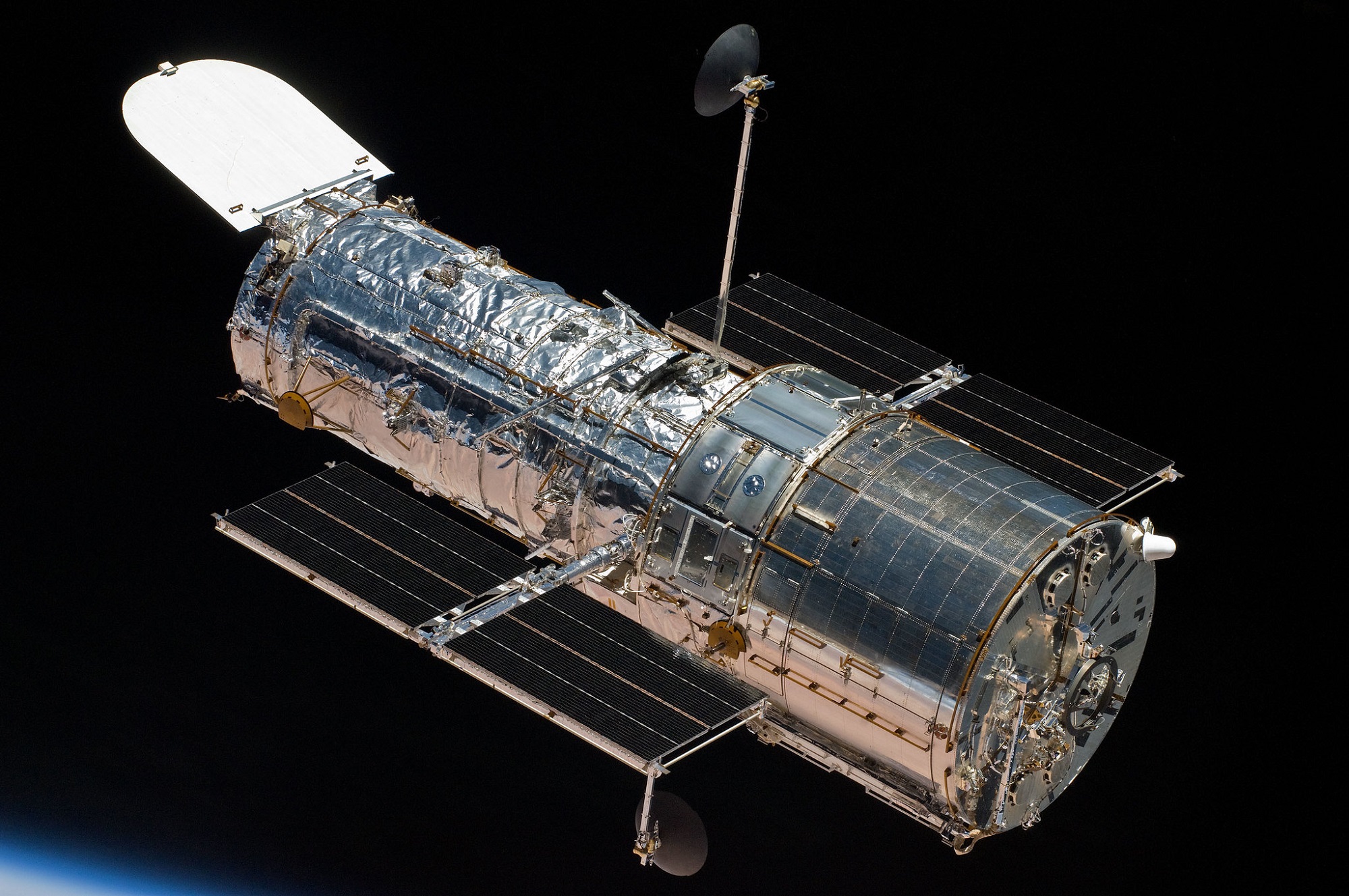
Astronomers famously snapped the first ever direct image of a black hole in 2019, thanks to material glowing in its presence. But many black holes are actually near impossible to detect. Now another team using the Hubble Space Telescope seems to have finally found something nobody has seen before: a black hole which is completely invisible. The research, which has been posted online and submitted for publication in the Astrophysical Journal, is yet to be peer-reviewed.

Black holes are what’s left after large stars die and their cores collapse. They are incredibly dense, with gravity so strong that nothing can move fast enough to escape them, including light. Astronomers are keen to study black holes because they can tell us a lot about the ways that stars die. By measuring the masses of black holes, we can learn about what was going on in stars’ final moments, when their cores were collapsing and their outer layers were being expelled.

It may seem that black holes are by definition invisible—they after all earned their name through their ability to trap light. But we can still detect them through the way they interact with other objects thanks to their strong gravity. Hundreds of small black holes have been detected by the way they interact with other stars.

There are two different approaches to such detection. In “X-ray binary stars”—in which a star and a black hole orbit a shared center while producing X-rays—a black hole’s gravitational field can pull material from its companion. The material circles the black hole, heating up by friction as it does so. The hot material glows brightly in X-ray light, making the black hole visible, before being sucked into the black hole and disappearing. You can also detect pairs of black holes as they merge together, spiraling inwards and emitting a brief flash of gravitational waves, which are ripples in spacetime.
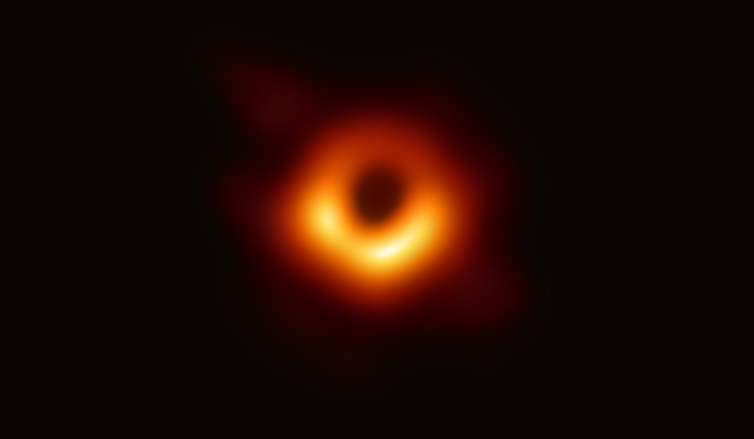
Fuzzy red ring of light around the first-ever photographed black hole
First image of a black hole. Event Horizon Telescope collaboration et al.

There are many rogue black holes that are drifting through space without interacting with anything, however, making them hard to detect. That’s a problem, because if we can’t detect isolated black holes, then we can’t learn about how they formed and about the deaths of the stars they came from.

New, dark horizons

To discover such an invisible black hole, the team of scientists had to combine two different types of observations over several years. This impressive achievement promises a new way of finding the previously elusive class of isolated black holes.

Einstein’s General Theory of Relativity predicted that massive objects will bend light as it travels past them. That means that any light passing very close to an invisible black hole—but not close enough to end up inside it—will be bent in a similar way to light passing through a lens. This is called gravitational lensing, and can be spotted when a foreground object aligns with a background object, bending its light. The method has already been used to study everything from clusters of galaxies to planets around other stars.

The authors of this new research combined two types of gravitational lensing observations in their search for black holes. It started with them spotting light from a distant star suddenly magnify, briefly making it appear brighter before going back to normal. They could not see any foreground object that was causing the magnification via the process of gravitational lensing, though. That suggested the object might be a lone black hole, something which had never been seen before. The problem was that it could also just have been a faint star.

Figuring out if it was a black hole or a faint star required a lot of work, and that’s where the second type of gravitational lensing observations came in. The authors repeatedly took images with Hubble for six years, measuring how far the star appeared to move as its light was deflected.

Eventually this let them calculate the mass and distance of the object which caused the lensing effect. They found it was about seven times the mass of our Sun, located about 5,000 light years away, which sounds far away but is actually relatively close. A star that size and that close should be visible to us. Since we can’t see it, they concluded it must be an isolated black hole.

Taking that many observations with an observatory like Hubble isn’t easy. The telescope is very popular and there is a lot of competition for its time. And given the difficulty of confirming an object like this, you might think the prospects for finding more of them aren’t great. Luckily, we’re at the beginning of a revolution in astronomy. This is thanks to a new generation of facilities, including the ongoing Gaia survey, and upcoming Vera Rubin Observatory and Nancy Grace Roman Space Telescope, all of which will take repeated measurements of large parts of the sky in unprecedented detail.

That’s going to be huge for all areas of astronomy. Having regular, high-precision measurements of so much of the sky will let us investigate en masse things which change on very short timescales. We’ll study things as varied as asteroids, exploding stars known as supernovas, and planets around other stars in new ways.

When it comes to the search for invisible black holes, that means rather than celebrating finding just one, we could soon be finding so many that it becomes routine. That will let us fill in the gaps in our understanding of the deaths of stars and the creation of black holes.

Ultimately, the galaxy’s invisible black holes are about to find it much harder to hide.

The Conversation

Read More

Tags: astronomynatureplanetscience

FREE Digital Newspaper Subscription!
Sign up for your free digital subscription. The FREE Cape Cod News

Unsubscribe
FREE Cape Cod News

FREE Cape Cod News

Free Cape Cod News is what's happening in the Cape Cod, U.S and World & what people are talking about right now. Local newspaper. Stay in the know. Subscribe to get notified about our latest news.

Related Posts

Fossil Discovery in Patagonia Reveals New Species of Horned Turtle thumbnail
Nature

Fossil Discovery in Patagonia Reveals New Species of Horned Turtle

by FREE Cape Cod News
June 12, 2026
How to Heal People with Science Fiction thumbnail
Nature

How to Heal People with Science Fiction

by FREE Cape Cod News
June 12, 2026
How to remove bamboo from your yard thumbnail
Nature

How to remove bamboo from your yard

by FREE Cape Cod News
May 17, 2026
The ‘Waymo of the sea’ tracks sperm whale conversations thumbnail
Nature

The ‘Waymo of the sea’ tracks sperm whale conversations

by FREE Cape Cod News
April 30, 2026
Load More
Please login to join discussion

Follow Us on Twitter

FREE Cape Cod News - Your source for local Cape Cod news, latest breaking U.S. and World news. Every day, all day. Subscribe for your favorite categories.

  • Trending
  • Comments
  • Latest
Top 5 lifestyle changes to improve your cholesterol thumbnail

Top 5 lifestyle changes to improve your cholesterol

August 2, 2020
Great Island Wellfleet

Cape Cod Ticks: Guarding Your Adventure in the Land of Sun, Sea, and Ticks

June 1, 2023
'Saved By the Bell' stars flip out as they re-watch scenes from the classic series thumbnail

‘Saved By the Bell’ stars flip out as they re-watch scenes from the classic series

July 20, 2020
Homo floresiensis Probably Didn’t Hunt Stegodons or Use Fire thumbnail

Homo floresiensis Probably Didn’t Hunt Stegodons or Use Fire

0
Researchers in Switzerland invent a new type of pixel thumbnail

Researchers in Switzerland invent a new type of pixel

0
USS Constitution Sets Sail in Boston Harbor to Celebrate America's 250th Birthday thumbnail

USS Constitution Sets Sail in Boston Harbor to Celebrate America’s 250th Birthday

0
Homo floresiensis Probably Didn’t Hunt Stegodons or Use Fire thumbnail

Homo floresiensis Probably Didn’t Hunt Stegodons or Use Fire

July 7, 2026
Researchers in Switzerland invent a new type of pixel thumbnail

Researchers in Switzerland invent a new type of pixel

July 7, 2026
USS Constitution Sets Sail in Boston Harbor to Celebrate America's 250th Birthday thumbnail

USS Constitution Sets Sail in Boston Harbor to Celebrate America’s 250th Birthday

July 6, 2026

FREE Cape Cod News On Twitter

Today’s News

  • Homo floresiensis Probably Didn’t Hunt Stegodons or Use Fire July 7, 2026
  • Researchers in Switzerland invent a new type of pixel July 7, 2026
  • USS Constitution Sets Sail in Boston Harbor to Celebrate America’s 250th Birthday July 6, 2026
  • America Has Two Options at the Box Office This Fourth of July Weekend. The Choice Is Clear. July 4, 2026
  • Massachusetts Set to Extend Statute of Limitations for Rape Cases With DNA Evidence July 4, 2026
Bring Cape Cod Home. Stunning beach prints, perfectly framed gifts. Bring Cape Cod Home. Stunning beach prints, perfectly framed gifts. Bring Cape Cod Home. Stunning beach prints, perfectly framed gifts.
ADVERTISEMENT
FREE Cape Cod News

Copyright © 2026 Free Cape Cod News

Navigate Site

  • About
  • Advertise
  • Privacy & Policy
  • Contact
  • Donate

Follow Us

Welcome Back!

Login to your account below

Forgotten Password? Sign Up

Create New Account!

Fill the forms below to register

All fields are required. Log In

Retrieve your password

Please enter your username or email address to reset your password.

Log In

Add New Playlist

No Result
View All Result
  • FREE Cape Cod News
  • Cape Cod News
  • News
    • News
    • Massachusetts
    • Breaking News
    • Cape Cod Weather
    • Storm Watch
    • Environment
  • Politics
    • democrats
    • republicans
  • Business
    • business
    • cryptocurrency
    • economy
    • money
    • Real Estate
    • Tech
  • World
  • Entertainment
  • Lifestyle
  • Photos
    • Orleans
    • Eastham
    • Wellfleet
    • Truro
    • Provincetown
    • Brewster
    • Chatham
  • Videos
  • Login
  • Sign Up

Copyright © 2026 Free Cape Cod News